The US has imposed visa restrictions on Central American nationals for their links with China in its latest move to pressure countries in Latin America and the Caribbean to break ties with the Asian powerhouse.
October 23, 2025 by Abdul Rahman, People’s Dispatch. We are grateful to Abdul Rahman and to People’s Dispatch for their work.
People’s Dispatch website: https://peoplesdispatch.org/
Key words: China, United States; Bolivarian Venezuela; China; Cuba; Latin America; Monroe Doctrine
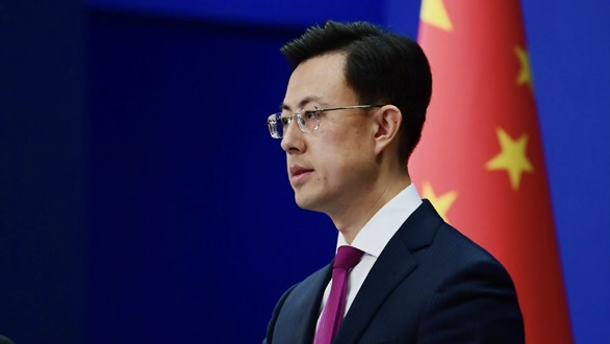
Foreign Ministry Spokesperson Guo Jiakun. Photo: MFA China
Chinese Ministry of Foreign Affairs spokesperson Guo Jiakun said on Tuesday, October 21, that his country has formally lodged serious protests against the announcement of US visa restrictions on Central American citizens for their links with the Communist Party of China (CPC).
Noting that no amount of weaponization of visas or other threats can hold back China’s “flourishing ties” with Central American countries, Jiakun suggested the US give up “it’s bullying and domineering act.”
Jiakun was replying to a question related to the US State Department’s press release last month announcing restrictions on visas for Central American nationals “working” in collaboration with the CPC, barring them and their family members from entering the US.
The State Department had said that the move was to counter China’s “corrupt” influence in Central America and to stop its alleged attempts to “subvert rule of law”. The press release did not specify the charges.
“The US takes illegitimate measures in the name of the rule of law, uses unilateral sanctions for political suppression and economic coercion targeting relevant regions, countries and personnel, puts its own domestic law above international law and its international obligations, and undermines the legitimate and lawful rights and interests of other countries,” Jiakun asserted.
China called the move yet another example of US “bullyism which seriously violates the principles of sovereign equality and non-interference in other countries’ internal affairs and sabotages the international order.”
Jiakun asserted that US accusations about China’s normal relationships with Central American countries displays its contempt for these countries’ independence and a lack of basic respect for their people and shows US politicians’ “deep seated arrogance and bias”.
“China will continue to be the good friend and good partner of Central American countries in the common pursuit of development and vitalization, and in building a China-LAC community with a shared future,” Jiakun said.
Assault on regional independence
The US has increased its targeting of Latin American and Caribbean countries and their relationship with China recently in what is widely assumed as its attempts to reassert its imperialist belief of the region being its “backyard”.
Referring to the long-held US belief that the region is within its sphere of influence, Jiakun had observed in June this year that all nations should realize that “the American continent is nobody’s backyard.”
Propounded by President James Monroe in 1823, the US has treated Latin America and the Caribbean as its “backyard” for almost two centuries now. The doctrine is often invoked to justify hostility towards the governments trying to build better relations with a foreign power or trying to assert independence from the hegemonic presence of the US.
It became the basis of a persistent imperialist US policy of coups and counter coups against popular governments and unilateral sanctions against various countries in the region, including Chile, Cuba, Venezuela, and others.
In addition, the US has been using its economic leverage and military might to threaten the countries in the region to force them to shape their policies according to its own liking.
In recent times, several top US officials have pushed for US interference in the region, with President Donald Trump openly threatening to take over Panama and claiming to have sanctioned CIA operations in Venezuela in addition to deploying military vessels in and around it.
The Chinese reaction was a response to the increasingly visible attempts by the US to dismantle or sabotage its growing political and economic relations with Latin American countries, built through decades of effort.
China has claimed that the US has been carrying out cyber attacks and digital surveillance in Latin American and the Caribbean countries, targeting Chinese interests in its effort to pressure the governments in the region to break or limit their ties with China.
Claiming that US attempts undermine the sovereignty of the countries in the region and amounts to interfering in their internal affairs, China has maintained that its relations with the countries in the region is based on mutual respect without any intention to harm any third country.