US military bases in Costa Rica?

Compiled by Martin Mowforth

Costa Rica’s undeserved reputation for neutrality and pacifism may be coming to an end soon when Laura Fernández takes office as the country’s new President on May 8th this year.

Fabián Silva Gamboa, a constitutional lawyer who advises the President-elect, has proposed a reform to the political constitution that would allow the United States to establish military bases there. Fernández has already signalled her intentions to replace the model of the country that arose from the 1948 civil war which abolished the country’s army and built the foundations of a welfare state.

Thanks to the neoliberal turn in the 1990s and 2000s and thanks to US pressure to militarise the country’s police force from the 1980s onwards, much of the welfare state is now in poor condition, poverty is not falling and violence and citizen security has been getting worse in recent years.

In recent years, Costa Rica has become a significant territory, especially its coastal areas, for storing and moving cocaine bound for the United States and Europe, and along with this violence has also increased. Silva Gamboa suggests that the presence of US bases will help to deter the incidence of drug trafficking. Others might suggest the opposite.

One might ask why a newsletter dedicated to environmental issues should be reporting on overtly and internationally political issues such as the US interference in other country’s national affairs, but quite apart from policy influence, the environmental pollution record of former US military bases is extremely abusive, as Costa Rica’s southern neighbour can testify. (See earlier ENCA Newsletters on the toxic pollution left behind in Panama by the former US bases.)

Given that Costa Rica abolished its army in 1948, the proposal would require a constitutional amendment, a broad legislative majority that the 31 legislative seats won by the PPSO are not sufficient. To move forward with this initiative, at least seven opposition legislators would need to join them.


Sources:


PANAMA’S SHIFT TOWARD MILITARIZATION RAISES SOVEREIGNTY CONCERNS

By Janvieve Williams Comrie

Black Agenda Report,

March 24, 2025

We are grateful to Janvieve and Black Agenda Report for this article.

Key words: MilitarizationPanamaSovereigntyUS ImperialismWars and Militarism


Panama’s deepening military ties with the U.S. challenge the nation’s constitutionally mandated demilitarization.

Panama City, Panama — Recent developments in Panama’s security policies indicate a departure from its longstanding commitment to demilitarization, raising concerns about national sovereignty and renewed U.S. military influence in the region.​

Since the disbandment of its military in 1990, following the U.S. invasion to depose General Manuel Noriega, Panama has maintained a policy of demilitarization. This stance is enshrined in Article 310 of the Panamanian Constitution, which explicitly states:​

“La República de Panamá no tendrá ejército” (“The Republic of Panama shall not have an army”).​

For over three decades, Panama has relied on its National Police and other security services to maintain internal order and public safety.​

Recent Developments: Military Aircraft Acquisition and Enhanced U.S. Cooperation

In February 2025, U.S. Defense Secretary Pete Hegseth and Panamanian President José Raúl Mulino agreed to expand cooperation between the U.S. military and Panama’s security forces. This agreement emphasizes shared security interests, notably the protection of the Panama Canal. ​

Subsequently, on March 12, 2025, Panama’s Cabinet Council authorized the purchase of six aircraft for the National Aeronaval Service (SENAN), totaling approximately $197 million.

This acquisition includes:​

  • Four A-29 Super Tucano light attack aircraft from Brazilian manufacturer Embraer, valued at over $78 million.​
  • Two C-295 transport aircraft from Airbus Defense and Space, costing more than $109 million.​

The government asserts that these aircraft will bolster SENAN’s capabilities in aerial patrols, disaster response, and humanitarian assistance.​

Implications for Sovereignty and Regional Dynamics

These developments have sparked a debate about Panama’s sovereignty and the potential resurgence of U.S. military influence in the region. Critics argue that such agreements could pave the way for a renewed U.S. military presence, reminiscent of past interventions. Furthermore, the investment in military-grade equipment appears to contradict Panama’s constitutional commitment to demilitarization.​

For organizations like AfroResistance, these issues are of particular concern. Historically, U.S. military interventions in Latin America have disproportionately affected Afro-descendant and Indigenous communities. The potential for increased militarization raises alarms about the marginalization and criminalization of these communities under the guise of security operations.​

Moreover, U.S.-based organizers and advocates for racial and social justice should remain vigilant. The patterns of militarization and foreign intervention observed in Panama could have broader implications for U.S. foreign policy in the region, potentially influencing domestic policies related to policing and community relations.

In light of these recent developments, AfroResistance and allied organizations are demanding transparency and accountability from both the Panamanian and U.S. governments. Militarization has historically led to increased repression, human rights violations, and the criminalization of Black and Indigenous communities across Latin America and the Caribbean. The renewed U.S. military presence in Panama, along with the government’s investment in military-grade equipment, contradicts the country’s constitutional commitment to demilitarization and risks deepening racial and economic injustices.

AfroResistance calls for:

  1. Full disclosure of the details of the February 2025 U.S.-Panama military agreement and an immediate review of its implications for Panamanian sovereignty and human rights.
  2. A halt to Panama’s militarization—including the cancellation of the $197 million military aircraft purchase, which diverts critical resources away from education, healthcare, and infrastructure.
  3. An end to U.S. military presence and intervention in Latin America and the Caribbean, which has historically led to destabilization, displacement, and repression of racialized communities.
  4. Investment in community-led security strategies that do not rely on militarization but instead prioritize economic and social justice, conflict resolution, and sustainable development.
  5. Commitment to a Demilitarized Latin America and the Caribbean – We demand that Panama and all nations in the region honor the 2014 CELAC declaration of Latin America and the Caribbean as a “Zone of Peace.” This means governments must commit to resolving conflicts without military intervention or foreign interference and reject policies that invite U.S. military presence or deepen militarization. We call on organizations, activists, and policymakers to endorse this demand through the Black Alliance for Peace’s Zone of Peace campaign, which advocates for the expulsion of colonialism, patriarchy, capitalism, and all forms of imperialism from the region. Signing onto this demand means standing for sovereignty, self-determination, and the protection of Black and Indigenous communities from militarized violence.

The international community, particularly Black and other organizers of color in the U.S., must recognize that what happens in Panama is not isolated. U.S. militarism abroad is deeply connected to the over-policing, surveillance, and criminalization of Black and Brown communities in the United States. The struggles against U.S. military expansion, imperialism, and state violence are interconnected—and so must be our resistance.

Panama stands at a crossroads. It can remain a leader in demilitarization and sovereignty, or it can fall back into the cycle of U.S. military dependence. The world must pay attention, and we must act now.

You couldn’t make it up – I – the case of Rodrigo Rosenberg

This is a slightly fuller text version of Box 9.2 (p. 173) in the book. In particular this website version provides more information about the sources that may be consulted for further information about the subject.

It was a murder that spawned a macabre YouTube sensation and threatened to topple Guatemala’s government. Hitmen shot dead Rodrigo Rosenberg, a lawyer, in Guatemala City soon after he recorded a sombre video blaming his imminent assassination on President Colom.

Rosenberg was thought to be in a suicidal state, following the assassination of his close friends Khalil Musa and his daughter Marjorie Musa, the recent death of his mother and separation from his wife and children. He had been investigating the deaths of the Musas and had been romantically involved with Marjorie Musa.

An investigation by the UN International Commission Against Impunity in Guatemala (CICIG) involved 300 officials and analysed more than 100,000 telephone calls and many videos, CCTV recordings, photographs and documents. Rosenberg had contracted his cousins Francisco José Valdés Paíz and José Estuardo Valdés Paíz to hire a hitman to carry out the murder of a supposed extortionist who was blackmailing Rosenberg. The identity of the target was allegedly unknown to the Valdés Paíz brothers, but they are now seen as the masterminds of the murder and are currently avoiding arrest. The machinations involved in the scheme would be of great fascination to dramatists, conspiracy theorists and fantasists, but are far too complex to be detailed here.

Ultimately the hit was carried out by a group led by Willian Gilberto Santos Divas, a former member of the police. Rosenberg was shot three times in the head, once in the neck and once in the back. In September 2009, nine suspects, including members of the police and military, were arrested for the murder.

The CICIG investigation concluded that the lawyer, in a state of depression over personal problems and angry with the government, sacrificed his own life in an elaborate sting. Rosenberg made the video knowing that two days later assassins he had hired would ambush him near his home. He apparently hoped the video would render him a martyr.

The Head of CICIG, Carlos Castresana, said they had found no evidence to link the President to Rosenberg’s death.


Sources:
CICIG (2010) ‘Caso Rosenberg: Resultados de la Investigación’, Guatemala City, United Nations CICIG, 12 January 2010.
Rory Carroll (2009) ‘Lawyer in YouTube murder plot video hired his own assassins – UN’, The Guardian, London, 14 January 2010.
Danilo Valladares (2009) ‘Guatemala: Police, Military arrested for lawyer’s murder’, IPS, 14 September 2009.
Julie Chappell (UK Ambassador to Guatemala) (2010) ‘The Rosenberg Assassination and Justice in Guatemala’, UK Foreign and Commonwealth Office, 13 January 2010.
Moon Travel Guide (2010) ‘Rosenberg planned his own execution, UN commission says’, 14 January 2010: www.moon.com/blogs/guatemala/ (accessed 24.01.10).
Gilberto López (2010) ‘La frase lapidaria, ……’, Semanario Universidad, www.semanario.ucr.ac.cr/index.php/mainmenu-mundo/ (accessed 10.01.10).
Martin Barillas (2010) ‘Guatemala: murdered lawyer planned his own death’, Spero News, 12 January 2010, www.speroforum.com/a/25412/ (accessed 24.01.10).
Central American Politics (2010) ‘Rosenberg orchestrated his own murder?’, 12 January 2010, http://centralamericanpolitics.blogspot.com/2010/01/ (accessed 24.01.10).

Costa Rica: land of natural wonders and threats to those who defend them

This is an extended version of Box 9.3 which appears in the book (page 182).

A small selection of the threats suffered by Costa Rican environmentalists follows:

1989 – the death in suspicious circumstances of the indigenous Antonio Zúñiga, who opposed illegal hunting in the Ujarrás Indigenous Reserve.

1992 – the death from shooting of Oscar Quirós, a leader in the fight against deforestation in Sarapiquí.

1994 – the death in a fire, whose cause was never satisfactorily explained, of Oscar Fallas, Jaime Bustamente and María del Mar Cordero, leaders of the Costa Rican Ecologists Association (AECO) who had run a strong campaign against the Stone Forestal company, then a subsidiary of Stone Container, a US company.

1995 – the death of David Maradiaga, a poet, ecologist and leader of AECO, after a mysterious disappearance for three weeks.

1995 – simultaneous house fires of the homes of Wilfredo Rojas (a geologist) and Elizabeth González, both professional members of the Campaign Against the Landfill Dump in Cordel de Mora.

1990s – constant threats received by members of the country’s ecological movement after denouncing environmental damage; cases include Ana Cristina Rossi (writer), Patricia Sánchez (journalist) and León González (forestry engineer).

1999 – repression and arrest of ecologists on a peaceful march to demand a moratorium on deforestation in the Osa Peninsula.

2005 – Didier Leitón Valverde – see Box 2.1 (page 35) in the book.

2007 – the lawsuit intervening against a programme on the University of Costa Rica Channel 15 made by ecologists Marielena Fournier and Fredy Pacheco.

2000s – intimidation against Alcides Parajeles, a campesino who opposes illegal hunting and felling in the Osa Peninsula; threats include the destruction of his stock fencing and firearms pointed at his family.

2008 – threats to the residents of the Perla de Guácimo as a result of their complaints against the contamination of their water by pineapple cultivation.

2009 – Aquiles Rivera – see Box 2.1 (page 35) in the book.

Throughout the 1990s and 2000s, other Costa Ricans who have been the subject of threats and intimidation as a result of their defence of the environment and rights include: Carlos Arguedas, Abel Sánchez, Marco Tulio Araya, Orlando Barrantes, Marta Blanco, Era Verde, Cristino Lázaro, Yamileth Astorga, Marielena Fournier, Fredy Pacheco, Ronald Vargas and Santos Coronado – amongst others.

Facussé threatens human rights activists, beheads peasants

04/26/2011 | AP

If you are wondering, dear reader, why I didn’t post on last week’s assassinations, including beheadings, it was because I simply could not handle it. It’s no excuse, the campesinos in Aguán aren’t backing off. But sometimes even the secondhand trauma is too much. It’s one of those dilemmas of violence research- one’s own pain is voluntary, in a sense, and thus cannot be legitimately compared to the pain of those who are experiencing the evident, immediate trauma (except within a theoretical framework of a violence continuum, using a million caveats). But perhaps my twisted gut, this sense of nausea and impotence can provide some small insight, even thousands of miles away, into the terror embodied by those facing the barrels of Facussé’s assassins’ guns.

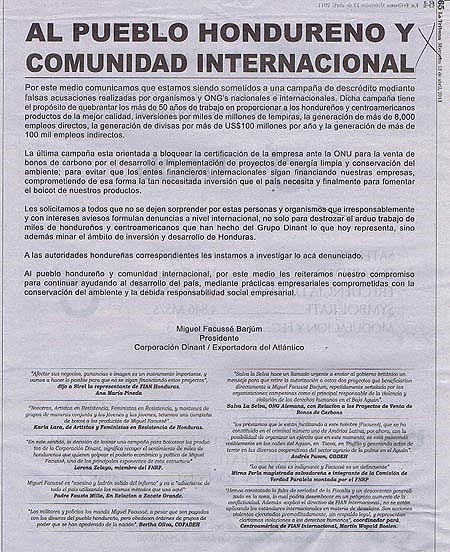
In any case, when he’s not busy ordering the murders of campesinos who get in the way of the WWF-eco-certified African Palms he has on the lands he stole from them, Facussé, who has admitted on national television that his guards kill peasants (and yet has never been investigated by the government for his role in these murders) is now fighting back. Tired of people calling him out, he took out a full-page ad in La Tribuna to publicly denounce/threaten the human rights defenders who have affected the only thing he cares about- his profits. What’s really astounding—and not just speaks, but shouts to the level of US-backed impunity in Honduras—is that, in order to personalize this threat against his opponents, he not only names them, but quotes exactly what they have to say about him, just as unapologetically as he admitted to doing exactly what many of them accuse him of- murdering campesinos. The ad, included below as an image, reads as follows:

To the Honduran Nation and International Community:
We write here to inform you that we are being subjected to a smear campaign using false accusations of national and international NGOs. Said campaign has the aim of destroying over 50 years of work to provide Hondurans and Central Americans with products of the highest quality, investments in the billions of lempiras, the creation of more than 8,000 direct jobs, the generation of more than US$100 million in profits annually, and the creation of more than 100 thousand indirect jobs.

The most recent campaign is aimed at blocking the certification of the company by the UN for the sale of carbon credits for the development and implementation of clean energy projects and projects for environmental conservation; to stop international financial institutions from financing our companies, thus putting at risk the investment so desperately needed by the country and finally to promote the boycott of our products.

We ask you all to not be fooled by these people and groups that denounce us internationally irresponsibly and with sinister intent, not only with the aim of destroying the hard work of thousands of Hondurans and Central Americans in making the Dinant Group what it is today, but also of undermining the environment for investment and development in Honduras.

We call upon the corresponding Honduran authorities to investigate what we have stated here.

To the Honduran nation and international community, we reiterate here our commitment to continue helping the development of the country, through business practices committed to the conservation of the environment and through proper corporate social responsibility.

Miguel Facussé Barjum, President, Dinant Corporation/ Exporter of the Atlantic

“To affect [his/its] business, profits and image is an important tactic, and we will do whatever we can to ensure that these projects do not continue receiving funding”,
said to Sirel the representative of FIAN Honduras, Ana María Pineda

“We, Artists in Resistance, Feminists in Resistance, and many allied groups along with the youth, have a boycott campaign against the products of Miguel Facussé”…
Karla Lara, of Artists and Feminists in Resistance of Honduras

As such, the decision to launch a boycott campaign against the products of the Dinant Corporation means joining together the desire of thousands of Hondurans who want to deal a blow to the economic and political power of Miguel Facussé, one of the leading exponents of this structure”
Lorena Zelaya, member of the FNRP

Miguel Facussé is “an assassin and thief straight out of Hell” who will “make himself owner of the entire country using the same methods he uses here”:
Father Fausto Milla, in relation to Zacate Grande

“The soldiers and police are commanded by Miguel Facussé, despite the fact that they are paid by the Honduran people, but they obey the orders of the de facto powers that have taken control of the nation”.
Bertha Oliva, COFADEH

“Save the Rainforest makes an urgent call to send a message to the British government to withdraw authorization from these two projects that will directly benefit Miguel Facussé Barjum, repeatedly indicated by campesinos organizations to be the primary individual responsible for the violence and violation of human rights in the Bajo Aguán”.
Save the Rainforest, German NGO in relation to the projects of carbon credit sales

“the loans that are being provided to this man [Facussé], who has become the number one criminal in Latin America, for now, with the ability of mobilizing an army that at this moment, openly patrols the streets of the Aguán, in Tocoa and in Trujillo, carrying out acts of terror in the numerous cooperatives in the palm agrarian sector in the Aguán”.
Andrés Pavon, CODEH

What I have seen is outrageous and Facussé is a criminal”
Mirna Perla, Salvadoran judge and member of the parallel True Commission set up by the FNRP

We have confirmed the lack of seriousness of the Attorney General and a generalized dissatisfaction in the region, which could lead to a dangerous increase in conflict. Furthermore—explained the leadership of FIAN International—, international standards are not being applied with regards to evictions. They are premeditated violent acts, without legal backing, and represent crystal-clear violations of human rights”,
Central American coordinator of FIAN International, Martin Wopold Bosien.

Quotha content by Adrienne Pine is licensed under a Creative Commons Attribution-Noncommercial-No Derivative Works 3.0 United States License.

Quotha content by Adrienne Pine is licensed under a Creative Commons Attribution-Noncommercial-No Derivative Works 3.0 United States License.

Impunity through the Honduran Public Prosecutor’s Office

Extracts from an interview with Berta Oliva, Coordinator of the Committee of Relatives of the Detained and Disappeared in Honduras (COFADEH), 23 August 2010, Tegucigalpa, conducted by Martin Mowforth and Lucy Goodman.

The international human rights institutions ask us: “Have you already made a denunciation to the Public Prosecutor?” By doing so we are strengthening a broken and criminally corrupt institute of the state. The worst thing for us to do is to make a serious denunciation and to name witnesses. We’ve had so many witnesses who have been assassinated.

On 30th July 2009 a teacher in a protest march was assassinated – he was called Roger Iván Murillo. There was a teacher ready to give his testimony about Roger’s assassination to the Public Prosecutor. He was a witness who knew who shot Roger because he was close to his colleague. Prior to his testimony the Public Prosecutor offered to give him protected witness status and within the month he was assassinated.

In September there was a lad who filmed when they entered the barrios and shot a union president. He went to the Public Prosecutor with his film to say that he had the proof and that if they would guarantee his safety he would give it to them because on the film you can see and identify who shot him. The event was on the 22nd September, and he went to the Public Prosecutor on the 25th September. In December his wife was killed. She was driving their vehicle and it was an attempt on his life, but they killed his wife instead.

Berta Oliva gave a number of other examples of how citizens’ resort to the Public Prosecutor gave rise to attacks on the person of those who had tried this approach.

How on earth can people go to give testimony in a legal action to the Public Prosecutor when the first thing they do is kill them? That is an indefensible situation in a failed state; that is what little hope we have in justice.

‘Anyone Can Murder A Woman In Honduras And Nothing Will Happen’ Women and girls in the barrios live in constant fear of sexual attack and a violent death

We are grateful to Rights Action for permission to reproduce this article by Sorcha Pollak.

By Sorcha Pollak, May 11, 2015

The windowless room in downtown San Pedro Sula, Honduras’s second city, bustles with activity as more than a dozen women take their seats at a long oak table. Water bottles are distributed and the electric fan switched to full blast to alleviate the oppressive summer heat creeping through the half-open door.

As the chatter dies out, Dicsa Bulnes clears her throat, introduces herself and begins to speak. “As a woman I feel trapped. I am a prisoner in my own home, there’s nowhere for me to go. I have no freedom.”

Bulnes, who is from the marginalised Afro-Caribbean Garífuna community, pauses for a moment to take a sip of water before she continues. “My partner nearly killed me. He still sends me threatening messages on my mobile attacking me. I’ve tried reporting him but the authorities won’t do anything. It feels like they are forcing women to buy their own coffins, to return to the attacker and suffer through the violence.”

Bulnes is a member of the Foro de Mujeres por la Vida (Women’s Forum for Life), an organisation which campaigns for women’s rights in a country that increasingly turns a blind eye to the violence and persecution that plagues the lives of countless women.

The forum has called a meeting in its small San Pedro Sula office so a female journalist from a safe western country can hear about the daily battles endured by the women of this small central American nation.

Aside from having one of the highest murder rates in the world – a national homicide rate of 79 per 100,000 – Honduras is rapidly becoming one of the most dangerous places on Earth for women.

Over the past decade, this nation of just over eight million people has witnessed a sharp increase in domestic and sexual violence and gender-based murder, a phenomenon known as femicide.
According to the University Institute for Democracy, Peace and Security in Honduras, 531 women were murdered in 2014, the majority of these aged between 15 and 24. Although this number was slightly lower than that of the previous year – there were 636 recorded murders of women in 2013 – the lack of accountability for this violation of a woman’s most basic human right has normalised the concept of femicide.

Between 2005 and 2013 the number of violent deaths of women increased by 263.4 per cent.
Carolina Sierra, spokeswoman for Foro de Mujeres por la Vida, says any attempts made to improve women’s rights before the 2009 military coup, which ousted reformist president Manuel Zelaya, were erased by the current administration.

“The increased militarisation of the country means all measures now focus on weapons and the military, while any measures that were taken to protect women’s rights have been completely abandoned,” says Sierra. “It’s almost like there’s a carte blanche for the assassination of women. Anyone can murder a woman in Honduras and nothing will happen.

“With this lack of accountability, women’s bodies are being used to send a message of fear and hate to the rest of the population.”

In 2014, the United Nations reported that 95 per cent of cases of sexual violence and femicide in Honduras were never investigated, while only 2.5 per cent of cases of domestic violence were settled.

Living in fear
Maria Teresa Meza, who lives in a small shack in the Bordo Gavión riverside slum of San Pedro Sula with her children, says sexual violence is the daily lot for most young women in the community. “Rape is a real danger for young women living in the bordos. If you let your daughter step outside her home she will either be raped or forced into selling drugs.”

Teenage girls living near the bustling food markets in the capital, Tegucigalpa, face the same level of violent abuse. Sarai (19) says many of her friends became pregnant when they were only 12 or 13 after meeting gang members in the marketplace. She says gangs “own the barrios” of Tegucigalpa, controlling how women walk, talk and dress. “They walk around the area monitoring everyone who comes in and out. They know exactly what’s going on and every single detail of our lives.”

Wendy (14) says women and girls are the first to suffer under this brutal culture of drugs, extortion and violence. Freedom of speech doesn’t exist in a world where themaras youth gangs rule the streets. “All I can see around me is violence; there never seems to be any light. Women don’t have the freedom to walk down the street without worrying about being attacked. The men rule and the women must follow.

“Some young women are raped by their own families,” she adds quietly. “They’re raped by their uncles and fathers.”

Supaya Martínez, co-director of the Centre for Women’s Studies Honduras, says gangs govern every aspect of a woman’s life, down to the colour she uses to dye her hair. “If a woman dyes her hair the wrong colour, the local gang will kill her.”

Martínez says people have learned to justify femicide by arguing that female victims are involved in gangs or connected with drug traffickers.

Murder of beauty queen
Last November the bodies of the Miss Honduras beauty queen, María José Alvarado, and her sister were found in the region of Santa Barbara in western Honduras. The sister’s boyfriend was found guilty of murdering the women in a jealous rage. However, Martínez says the government claims the young women were connected to drug-traffickers.

“It’s as if it was their fault. They place the blame on the victim and basically say she was responsible for her own death.

“There hasn’t been a strong enough response from the government to end this. Women die every day but no one is punished and so the crimes just continue.”

Last year UN special rapporteur on violence against women Rashida Manjoo called for the Honduran government to address the “climate of widespread and systematic crime, corruption and impunity”.

Supports cut
However, as part of its process of restructuring in 2014, the government actually downgraded the status of the National Institute for Women, cut funding to women’s rights groups and abolished the police emergency telephone line for female victims of violence.

“We’re living in a country where women don’t feel safe enough to report acts of violence to the authorities,” says Sierra, adding that many women who speak up about injustice must pay for it with their lives.

“Men are killing women with rage, fury and cruelty. We’re scared to speak out but this is the daily lot we’re living.

“We’re forced to live in a culture of violent machismo which has become a natural, accepted part of Honduran society.”


http://www.irishtimes.com/news/world/anyone-can-murder-a-woman-in-honduras-and-nothing-will-happen-1.2207043

Rights action: www.rightsaction.org
Otto Pérez Molina

Elected at the end of 2011, General Otto Pérez Molina was inaugurated as President of Guatemala in early 2012. After training at Guatemala’s National Military Academy, the School of the Americas and the Inter-American Defence College, Pérez Molina served in the Guatemalan army’s special forces known as the Kaibiles which are described by Wikipedia as “notoriously brutal”[1] and by the Commission for Historical Clarification (Comisión para el Esclaracimiento Histórico, CEH) as “a killing machine”.[2]

He later became director of military intelligence and inspector-general of the army, but during the 1978 – 1982 period of slaughter in the Guatemalan countryside he served as a major in the Ixil Triangle in the El Quiché department of Guatemala. It was here that acts of genocide were routinely committed against local Mayan populations. These acts were documented by the United Nations sponsored Truth Commission[3] which reported on war crimes and acts of genocide committed during the 35 years of internal conflict and which found that the military had been responsible for 93 per cent of the 660 massacres which took place during the conflict. Over a half of all the massacres took place in El Quiché department and many of these took place in the Ixil Triangle where Pérez Molina was in charge of counter-insurgency at a time when 80 – 90 per cent of the villages were razed.[4]

The Truth Commission was unable to name individuals involved in the slaughter, but a letter of allegation sent in July 2011 by three human rights defenders[5] to the United Nations accused Pérez of involvement in genocide and torture committed in El Quiché during the Guatemalan war.[6] Pérez has always denied any wrongdoing during the war and is proud of his record, particularly his involvement in the peace process negotiations. Despite this involvement in the peace process, investigative reporter Allan Nairn has demonstrated the links between the operations of the Guatemalan death squads at the same time (1994) as the G-2 Intelligence Unit was headed by Pérez Molina.[7] Prosecutors, however, have declined to pursue actions against him on the grounds that the evidence is believed to be slim.[8]

In his election campaign, Pérez tried to reach out to indigenous groups and to emphasise his progressive and reforming side, despite his promises to crack down on violent crime and drug traffickers with an ‘iron fist’.


[1] Wikipedia entry for Otto Pérez Molina (19 March 2012) (accessed 23.03.12).
[2] Commission for Historical Clarification (February 1999) ‘Guatemala: Memory of Silence’, available at: http://shr.aaas.org/guatemala/ceh/report/english/conc1.html (accessed 14.04.12).
[3] Guatemalan Commission for Historical Clarification (CEH) (1999) ‘Memoria de Silencio’, United Nations.
[4] Mica Rosenberg and Mike McDonald (11 November 2011) ‘New Guatemala leader faces questions about past’, www.reuters.com/article/2011/11/11/us-guatemala-perez-f-idUSTRE7AA38320111111 (accessed 1 April 2012).
[5] Annie Bird, Co-Director, Rights Action; Jennifer K. Harbury, human rights attorney; and Kelsey Alford-Jones, Director, Guatemala Human Rights Commission-USA.
[6] Europa Press (20 July 2011) ‘Denuncian a Pérez Molina por genocidio y tortura de indígenas en Guatemala’, www.europapress.es/latam/guatemala/noticia-guatemala-denuncian-candidato-perez-molina-genocidio-tortura-indigenas-guatemala-20110720220454.html (accessed 1 April 2012).
[7] Allan Nairn (17 April 1995) ‘CIA Death Squads’, available at: www.whale.to/b/nairn.html (accessed 19.04.12).
[8] Op.cit. (Rosenberg and McDonald).

Honduran environmentalists under threat

The following article was included in the January 2008 ENCA Newsletter (no.44) as a report on a summer 2007 ENCA study tour of Honduras.

By Martin Mowforth

ENCA’s 2007 environmental study tour of Honduras met with our Honduran counterparts who work in a range of grassroots socio-environmental organisations there. We met and spent several days with members of the Fundación Prolansate, the Olancho Environmental Movement (MAO), the Civic Council of Popular and Indigenous Organisations of Honduras (COPINH) and the International Centre for Information on Cover Crops (CIDICCO). With several members of these organisations we also attended the launch of an Amnesty International report on ‘Persecution and Resistance: The experience of human rights defenders in Guatemala and Honduras’.

Even before our involvement with Amnesty International, it is no exaggeration to say that we had been shocked by the level of danger suffered by our Honduran counterparts in these organisations. Had we been aware of this beforehand, we would have allowed ourselves at least a couple of days after each of our visits to these organisations to absorb the reality of the threats they have to live with. A little background may be helpful to explain the situation our partner organisations face, along with a few details of some of the assassinations which have already occurred and the threats currently faced.

In the 1980s, whilst wars raged around Honduras, the country became known as USS Honduras for its role in harbouring, training and supplying the contras in Nicaragua. In that decade it developed its own death squads – like most of the death squads in Latin America, they were inspired and trained, overtly and covertly, by branches of the US government – to snuff out dissent and opposition within its own borders.

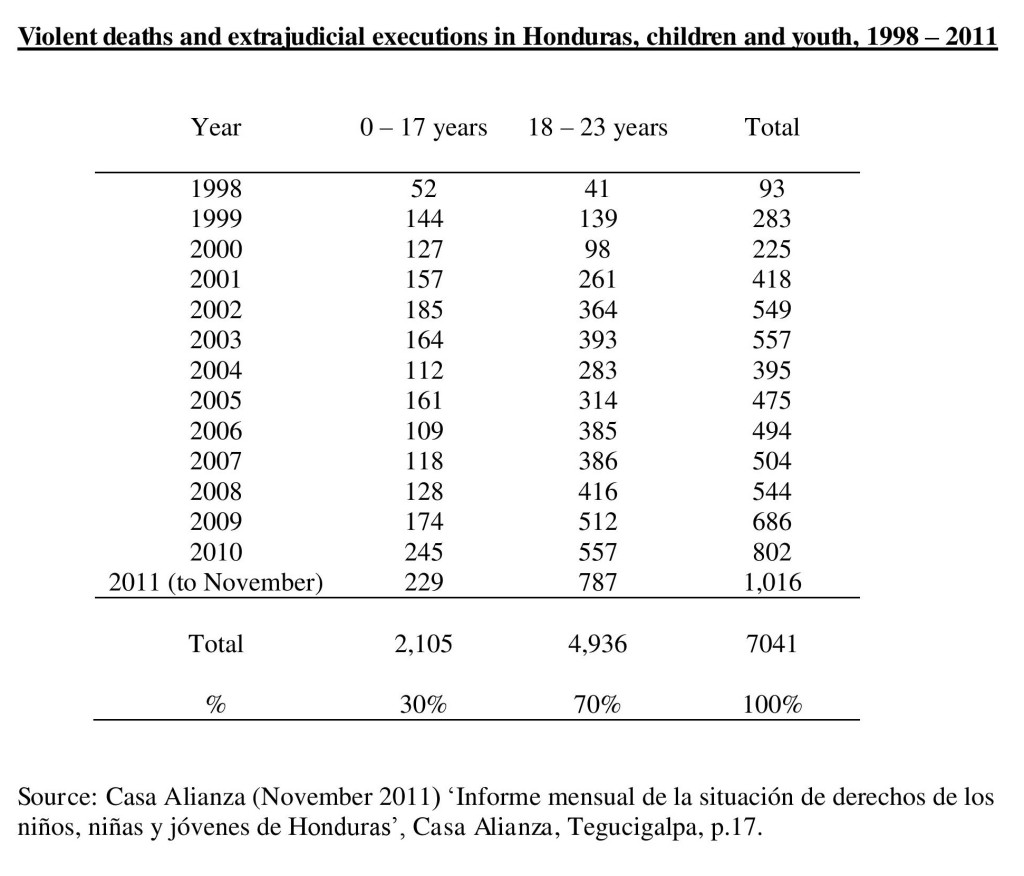
The peace accords and the end of the wars fought in the territories of its three neighbours (Guatemala, El Salvador and Nicaragua) did not exactly bring an end to the activities of the death squads in Honduras. The political targets were replaced by those deemed appropriate for a spot of social cleansing – street children and vagrants. Casa Alianza (a street childrens’ organisation which works in a number of Central American capital cities) reports the violent deaths and arbitrary executions of 3,395 children and youths from 1998 to 2006 (inclusive)[1] – a systematic form of genocide, or as Casa Alianza calls it “a selective policy of extermination”.

But the death squads also began to make themselves available for other targets, one of which was provided by environmentalists and social activists who were leading protests against the indifference, disruption, dislocation and contamination caused by commercial activities and so-called development projects. Since the assassination of Jeannette Kawas in 1995, environmentalists in Honduras have been a major target for the death squads.

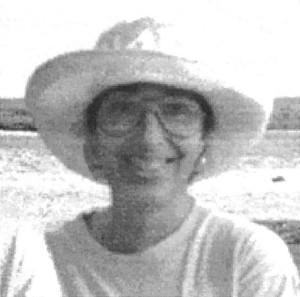
Jeannette-Kawas-300x297Jeannette Kawas (pictured) was the President of Fundación Prolansate, an environmental and conservation organisation which has the responsibility for the care of a number of protected areas on the northern coast of Honduras around Tela Bay. It was as a result of her work that these areas were granted stronger protection by the Honduran state and that a large area around Punta Sal was awarded the status of a National Park. But this work did not please everyone, and the advances made during her presidency of Prolansate were seen as obstacles to the development of a number of business projects. The organisation was involved in campaigns against transnational companies which were deforesting and polluting the local environment. It was also involved in a local controversy which approved the movement of landless campesinos (supported by the Honduran Ministries of Agriculture and Tourism) into areas under Prolansate’s protection. Moreover, the area was seen as ripe for tourism investment, and land purchases by interested companies and individuals (even without the construction of tourism infrastructure) had already forced up land values and converted the area into a source of capital accumulation.
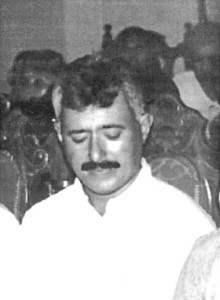
Jeannette Kawas was assassinated in February 1995, and still nobody has been brought to justice for the crime. Despite all the possible sources of violence given above, it is currently believed that the intellectual author of the crime was Jorge Montoya who had sold land for logging, the permit for which was cancelled by AFE-COHDEFOR, the state Forestry Commission, under Jeannette Kawas’ prompting and local management.

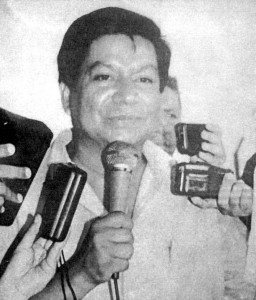
Carlos-Escaleras-r-220x300Carlos Escaleras (pictured) was assassinated in October 1997. Throughout the 1990s Carlos coordinated the efforts and campaigns of COPA, the Coordinating Body of Popular Organisations of Aguán, and in this role he often found himself and the organisation protesting about the contamination caused by a palm oil extraction plant owned by Miguel Facussé, a rich and powerful businessman and nephew of a former President of Honduras. Amongst others, Facussé has been accused of the intellectual authorship of the assassination of Carlos, but “the parliamentary immunity of some, the economic, political and military power of others and the complicity of judges and magistrates have been the obstacles to justice; as a result of these, the intellectual authors and material assassins have remained wrapped in impunity”[2].
Carlos Antonio Luna (pictured left) was assassinated in May 1998 at the age of 42. He fought against illegal timber felling in the region of Catacamas in the department of Olancho and exposed those responsible for it. In April he received death threats, and he left with COFADEH (the Honduran Committee of Families of the Detained and Disappeared) a note to say that if anything happened to him, the intellectual authors of the threats were Lincoln Figueroa, a nationalist deputy who, it was known, had already remarked that only killing Carlos Luna would solve thCarlos-Antonio-Luna-pictured-left-256x300eir problems; Jorge Chávez, a timber merchant; José Angel Rosa, another timber merchant who had repeatedly threatened Carlos with death; and the Soto family who were involved in the illegal exploitation and trafficking of timber. Jorge Chávez was captured in 2002 and served four years in jail, gaining his freedom in 2006. The other intellectual authors remain free. The material assassin Oscar Rodríguez is currently serving a 27 year sentence for the crime.
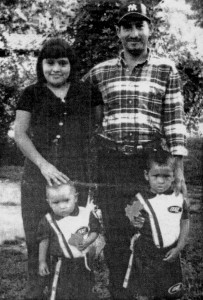
Carlos Roberto Flores (pictured right) was 28 when he was assassinated in June 2001. He paid with his life for his opposition to the Babilonia hydroelectric project. Six security guards of Energisa, the company responsible for the project, are accused as material perpetrators of the crime – three of them have been detained and three have fled. Accused as intellectual authors of the crime is Héctor Julián Borjas Rivera, President of the Energisa company, which had received a $270 million loan from the Central American Bank of Economic Integration (BCIE) for the project. He has not been arrested.

José Mauricio Hernández Cáceres was assassinated in November 2002. He was killed because of his public opposition to illegal logging in Olancho. In 2004, Alexis Días Cáceres was sentenced to 20 years in prison for committing the crime with two accomplices who were given lesser sentences. Within the communities in Olancho in which José was known, it is widely believed that the intellectual authors of the assassination are Rúben Antúnez (a cattle rancher), Francisco Zúñiga (mayor of the communCarlos-Roberto-Flores-pictured-right-203x300ity of Jano and an exploiter of the local forest timber) and Juan Lanza (a timber merchant).
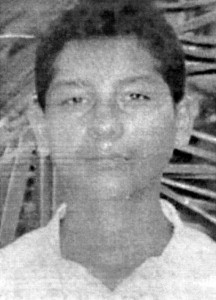
Carlos Arturo Reyes (pictured below left)Carlos Arturo Reyes (pictured right) was 23 years old when he was assassinated in July 2003. After the March For Life in 2003, his name appeared on a death list of environmentalists to be assassinated. Carlos’s brother, Francisco Nahín Reyes Méndez, is believed to be responsible for the assassination. Francisco is known for his violent character and is also believed to have killed his girlfriend. It is thought that he was used by the logging companies to carry out this crime, after which he fled to the USA. But he returned several months later and is still at large in Honduras.

In December 2006, two members of the Environmental Movement of Olancho (MAO by its Spanish initials), Heraldo Zúñiga and Roger Iván Cartagena, were shot dead in the town of Guarizama, in Olancho. They were killed in execution style bCarlos-Arturo-Reyes-pictured-right-216x300y four members of the national police who are now in custody. The MAO has consistently campaigned against illegal logging in Olancho department since the year 2000 and has not been afraid to name the names of those responsible and to denounce corrupt officials of COHDEFOR, the Honduran Forestry Development Commission, which issues permits for felling. In May 2006 Heraldo Zúñiga stated that he had received several death threats after publicly exposing cases of illegal logging in the west of the department. That same month the Inter-American Commission on Human Rights (IACHR) requested information about this case from the Honduran government, which implemented protective measures for Padre Andres Tamayo, leader of the MAO. No protective measures for other members of the MAO were implemented. After the executions of the two MAO members in December 2006, the IACHR ordered the Honduran government to provide protection for other members of the MAO, but as ENCA members discovered during their visit in August 2007, no such protection has yet been provided.

The litany of assassinations could continue, but space prevents it. Today’s most pressing concern is the list of those currently living under threat of death or of persecution and prosecution by the authorities acting upon accusations made by the illegal loggers and companies whose operations they oppose. Those under threat of death include those listed after the first March For Life in June 2003, when thousands of people walked more than 170 km from Juticalpa in Olancho department to Tegucigalpa to demand an end to the illegal timber operations in Olancho. The march was headed by Padre Andres Tamayo, the priest in the town of Salamá, who now has a permanent bodyguard of Honduran soldiers because of the death threats he has received. Padre Andres drove us around various parts of Olancho to show us the deforestation, the areas where the MAO and local communities have blockaded roads to stop the loggers, the places where unarmed local residents have experienced tense stand-offs against hired gangs armed with AK-47s and Uzis. But what disturbs members of the MAO most is the threats faced by other members of the MAO who have no bodyguards and no protection despite the IACHR’s instructions to the Honduran government. Recent history shows that the threats are not idle. The logging companies and all those who profit from the operation will stop at nothing to ensure the profits they gain from selling their timber to the USA and Europe[3].


[1] Casa Alianza UK Newsletter, February 2007. 35 per cent (1,193) of these were children under the age of 18.
[2] Comité de Familiares de Detenidos-Desaparecidos en Honduras (COFADEH) (2006) Erguidos Como Pinos: Memoria sobre la construcción de la conciencia ambientalista, Tegucigalpa, page 48.
[3] Environmental Investigation Agency (EIA) (2005) ‘The Illegal Logging Crisis in Honduras: How US and EU imports of illegal Honduran wood increase poverty, fuel corruption and devastate forests and communities’. The report is available from the EIA’s website: www.eia-international.org

CISPES Supports Human Rights Defender in Face of Death Threats

Sent: 26 January 2010 09:01 by Committee in Solidarity with the People of El Salvador (CISPES)

CISPES would like to express our heartfelt solidarity with El Salvador’s Human Rights Ombudsman, Oscar Luna, who announced last Thursday, January 21 [2010] that he and his family have been receiving death threats. Luna declared that the threats have been delivered in the name of supposed extermination groups, demanding that he leave the country within 48 hours so as to not “obstruct the work of social cleansing” that they are attempting to carry out against “delinquency.” The re-emergence of such “social cleansing” groups was previously denounced by former Human Rights Ombudswoman Beatrice de Carrillo in 2006.

Oscar Luna has been an outspoken advocate for human rights in El Salvador. He defended the Suchitoto 13, water privatization protesters who were charged under the anti-terrorism law and denounced electoral fraud by ARENA during the 2009 elections. Most recently, he has pushed the Attorney General’s office to investigate the intellectual authors of the murders of Marcelo Rivera, Ramiro Rivera and Dora Alicia Sorto Recinos and mobilized his office to provide protection for environmental activists in Cabañas. He has decided not to leave his post, nor to leave the country. Instead, he is calling on the Attorney General and the head of the National Civilian Police to investigate and to provide additional protection for him and his family.

On January 16, El Salvador celebrated the 18th anniversary of the Peace Accords, when much of the State’s repressive apparatus was formally dismantled. However, the re-emergence of death squad structures, and the continued death threats against and assassinations of social movement activists, FMLN leaders and human rights defenders, represent a terrifying roll-back in the struggle for real democracy. CISPES stands with Mr. Luna in defending his position and in continuing his important work of promoting human rights in El Salvador and we call on the Attorney General’s office and the National Civilian Police to do everything within their power to protect Mr. Luna and all others in the struggle for justice in El Salvador.